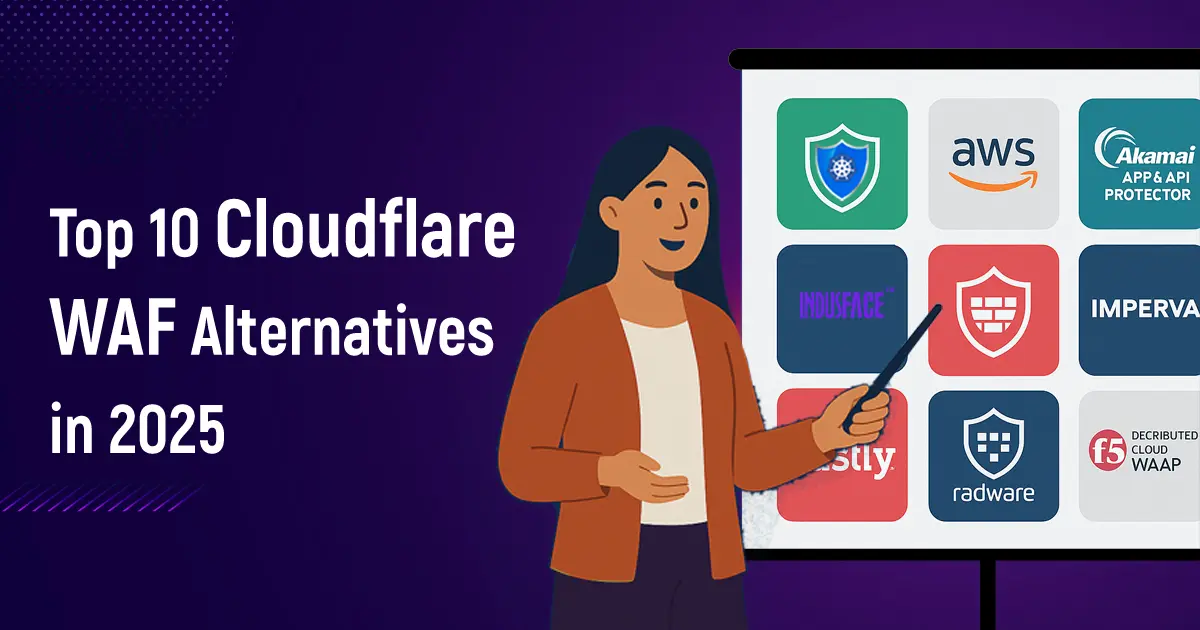
Cloudflare WAF is a popular choice in the cybersecurity landscape, but it isn’t a one-size-fits-all solution. In 2025, organizations are seeking WAFs that offer greater flexibility, deeper customization, Kubernetes-native support, and tighter integration with DevSecOps workflows.
Whether you’re aiming to move beyond Cloudflare’s limitations or looking for an alternative better aligned with your architecture, here are the Top 10 Cloudflare WAF Alternatives to consider—starting with a game-changer in the field: Prophaze WAF.
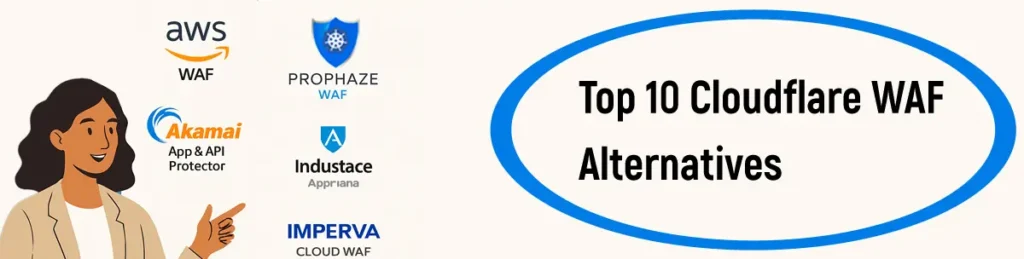
Top 10 Cloudflare WAF Alternatives
1. Prophaze WAF: AI-Powered, Kubernetes-Native Security
Best for: Cloud-native, containerized, and microservices-based environments.
Prophaze WAF is transforming modern application security through its AI-driven, Kubernetes-native architecture. Specifically engineered for dynamic cloud environments, Prophaze surpasses signature-based detection by actively analyzing anomalies and thwarting zero-day threats in real time. In contrast to traditional WAFs, which tend to be inflexible and difficult to scale, Prophaze provides:
Key Features:
- AI-driven behavioral threat detection (not signature-based)
- Seamless integration with Kubernetes and CI/CD pipelines
- Real-time API protection with zero-configuration deployment
- Cloud-agnostic design for hybrid and multi-cloud flexibility
Ideal for organizations adopting DevSecOps, scaling microservices, or securing APIs in high-speed environments.
2. AWS WAF
Best for: Applications hosted exclusively on AWS.
Amazon Web Services features a native Web Application Firewall (WAF) that is closely integrated into its ecosystem. Although it delivers scalable protection for applications hosted on AWS, configuring and managing it can be complicated without extensive AWS knowledge.
Pros:
- Native to AWS ecosystem
- Scales with serverless and containerized workloads
- Supports managed rule groups
Cons:
- Complexity in setup for non-AWS users
- Lacks multi-cloud flexibility
3. Akamai App & API Protector
Best for: Large-scale, globally distributed applications.
Akamai is recognized for its extensive edge network, offering strong DDoS protection and application-layer defense. While it stands out in performance and global reach, it may be too expensive for smaller teams.
Pros:
- Strong performance and reliability
- Built-in API security
- Global edge mitigation
Cons:
- Expensive for SMBs
- Less agile for rapid deployments
4. Indusface AppTrana
Best for: Managed WAF with continuous vulnerability scanning.
AppTrana integrates automated security scanning with managed rule sets and continuous monitoring. It is an excellent option for businesses seeking a comprehensive managed service that includes a human-in-the-loop framework.
Pros:
- Always-on security + manual verification
- Risk-based protection with real-time patching
- Affordable plans for SMEs
Cons:
- Limited self-service customization
- Some lag in updating rules for new threats
5. Imperva Cloud WAF
Best for: Enterprises with compliance-heavy workloads.
Imperva provides extensive security for web and API traffic, featuring bot mitigation and behavioral analytics. It’s ideal for industries with strict compliance needs, although deep customizations might need vendor assistance.
Pros:
- Behavioral analysis and bot management
- Advanced API security and analytics
- PCI-DSS and HIPAA ready
Cons:
- May require vendor support for customization
- Steeper pricing for advanced features
6. Fastly Next-Gen WAF (Signal Sciences)
Best for: DevOps teams focused on speed and observability.
Fastly’s acquisition of Signal Sciences has resulted in a robust next-gen WAF solution. Featuring agent-based deployment and real-time insights, it’s perfect for DevOps teams seeking security without compromising performance.
Pros:
- Developer-friendly integration
- Real-time insights and telemetry
- Scalable for microservices
Cons:
- Requires configuration to maximize protection
- Smaller rule database than traditional WAFs
7. Radware Cloud WAF
Best for: Behavioral-based protection against unknown attacks.
Radware offers a flexible WAF featuring behavior-based detection. It is designed to safeguard against the OWASP Top 10 vulnerabilities and includes strong DDoS mitigation features. Nonetheless, its installation might cater more to enterprise needs rather than those of small and medium-sized businesses.
Pros:
- Auto-learning capabilities
- OWASP Top 10 and API protection
- Multi-layered threat response
Cons:
- Enterprise-oriented setup
- Limited support for smaller orgs
8. Barracuda CloudGen WAF
Best for: SMBs on Azure or hybrid cloud deployments.
Barracuda’s CloudGen WAF features a user-friendly interface and seamlessly integrates with Microsoft Azure. This solution is particularly beneficial for businesses moving to the cloud and seeking simple policy management.
Pros:
- Azure-native integration
- Simplified policy management
- User-friendly interface
Cons:
- Less granular control
- Not ideal for complex app ecosystems
9. Sucuri Website Firewall
Best for: Bloggers, small businesses, and WordPress sites.
Sucuri is a favored option for smaller websites and WordPress users, offering a cost-effective and lightweight WAF. Although it does not include enterprise-level features, it is ideal for content sites and blogs.
Pros:
- Easy setup for CMS-based sites
- Malware cleanup included
- Budget-friendly plans
Cons:
- Not scalable for enterprise workloads
- Limited customization
10. F5 Distributed Cloud WAAP
Best for: Enterprises needing unified API + App protection.
F5’s solution provides comprehensive WAAP (Web Application & API Protection) featuring integrated bot defense and API discovery. It is well-suited for large enterprises operating within multi-cloud environments, although it presents a significant learning curve.
Pros:
- Unified visibility across APIs and apps
- Bot defense and API posture assessment
- Enterprise-grade scalability
Cons:
- Complex onboarding
- Higher pricing tiers
Why Prophaze WAF Represents the Future of Cloud Security
Although each alternative offers unique advantages, Prophaze WAF is distinguished by its AI-first and Kubernetes-native design, specifically created for today’s cloud environments. Whether you’re implementing a distributed architecture, expanding microservices, or integrating DevSecOps, Prophaze delivers the agility, intelligence, and resilience essential for your infrastructure.
Prepared to leave behind the constraints of traditional WAFs? Transition to Prophaze and discover a new era of API and application protection.