
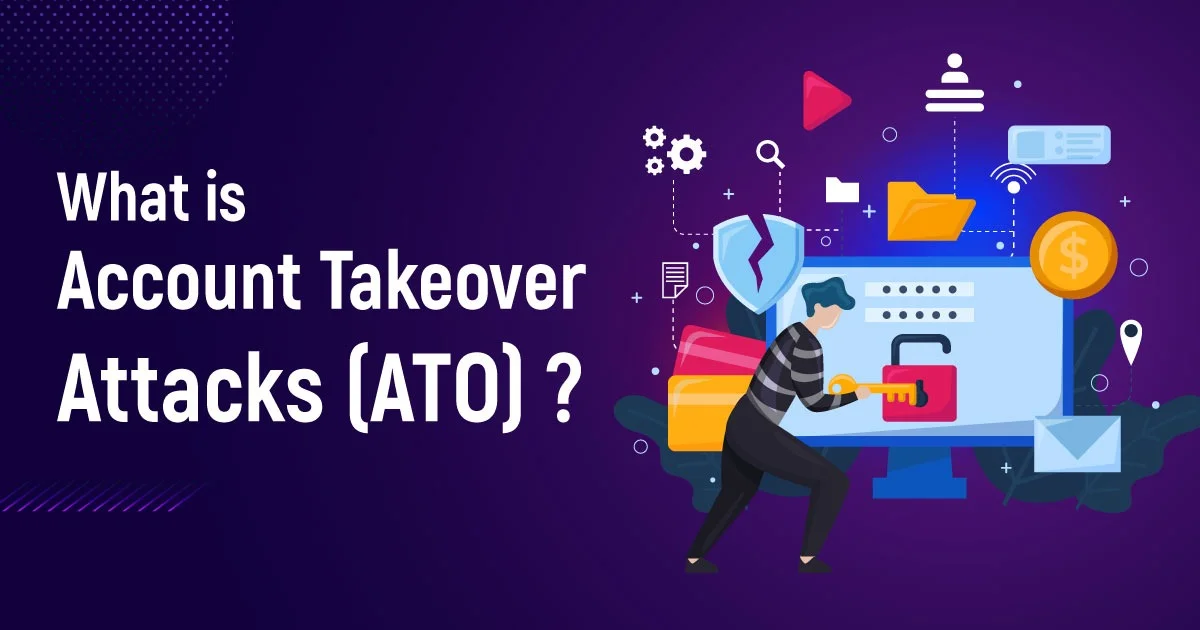
The smooth and connected digital world is also an arena for cybercriminals who organize account takeover (ATO) attacks. Consider this: Cyber pirates use stolen credentials like keys to treasure chests, navigating the digital landscape with stealth and precision. Let’s embark on a journey to understand the anatomy of this sophisticated attack and how it poses significant risks to organizations across sectors.
Who Are Behind Account Takeover (ATO) Attacks?
Account hijacking, the dangerous offspring of data breaches and phishing campaigns, allows cyberattackers to use stolen names and passwords to take advantage of online accounts as a digital marketplace for private transactions. A website that is the fog becomes a place for these stolen credentials to be traded, opening the door for abuse.
The Impact of Account Takeover (ATO) Attacks
Cybercriminals use several techniques to utilize bots to continuously target websites, shopping centers, financial institutions, e-commerce sites, travel sites, and social media services. Their work entails a cautious dance of trying various password combinations until the door is opened to an unknowing victim’s record.
How to Deal with Account Takeover (ATO) Incidents
After gaining access, these cyber criminals make both beneficial and bad use of their newly acquired authority. Compromised credentials are either sold to the cyber underworld’s highest bidder or begin to be used extensively. This includes identity theft, a dangerous dance where personal information is used as currency for fraudulent activities such as insurance fraud, credit card fraud, and even phishing scams targeting members of the public who don’t think about it.
Navigating the ATO Landscape
The ATO attacks were broad in scope, encompassing financial institutions and each business with an entry point. The lure of revenue leads cybercriminals to target industries such as healthcare, education, and e-commerce, where sensitive data and financial transactions are common.
Protecting Against ATO

Amid this digital arms race, organizations are defending themselves with a multi-pronged weapon:
Multi-factor authentication:
Using authentication beyond the password, such as security questions, tokens, or biometric identification.
Account Monitoring Systems:
Monitoring and sandboxing suspicious accounts to prevent further attacks.
AI-based detection:
Harnessing the power of artificial intelligence to distinguish sophisticated ATO efforts from bot attacks.
Web Application Firewall (WAF):
Digital barricades installed to filter and block malicious traffic attempting to install credentials, brute force attacks, or other nefarious activity.
Collaborative Security:
Collaborate with solutions like Imperva’s Advanced Bot Protection and Account Guard to strengthen security against evolving threats.
Strengthening Defenses Against ATO Attacks
Account hijacking attempts lurk in the shadows in the digital realm, waiting to exploit a vulnerability. Armed with knowledge, prudence, and robust security, we can continue to face emerging cyber threats, protect digital societies, and preserve trust in the interconnected world in which we live.